

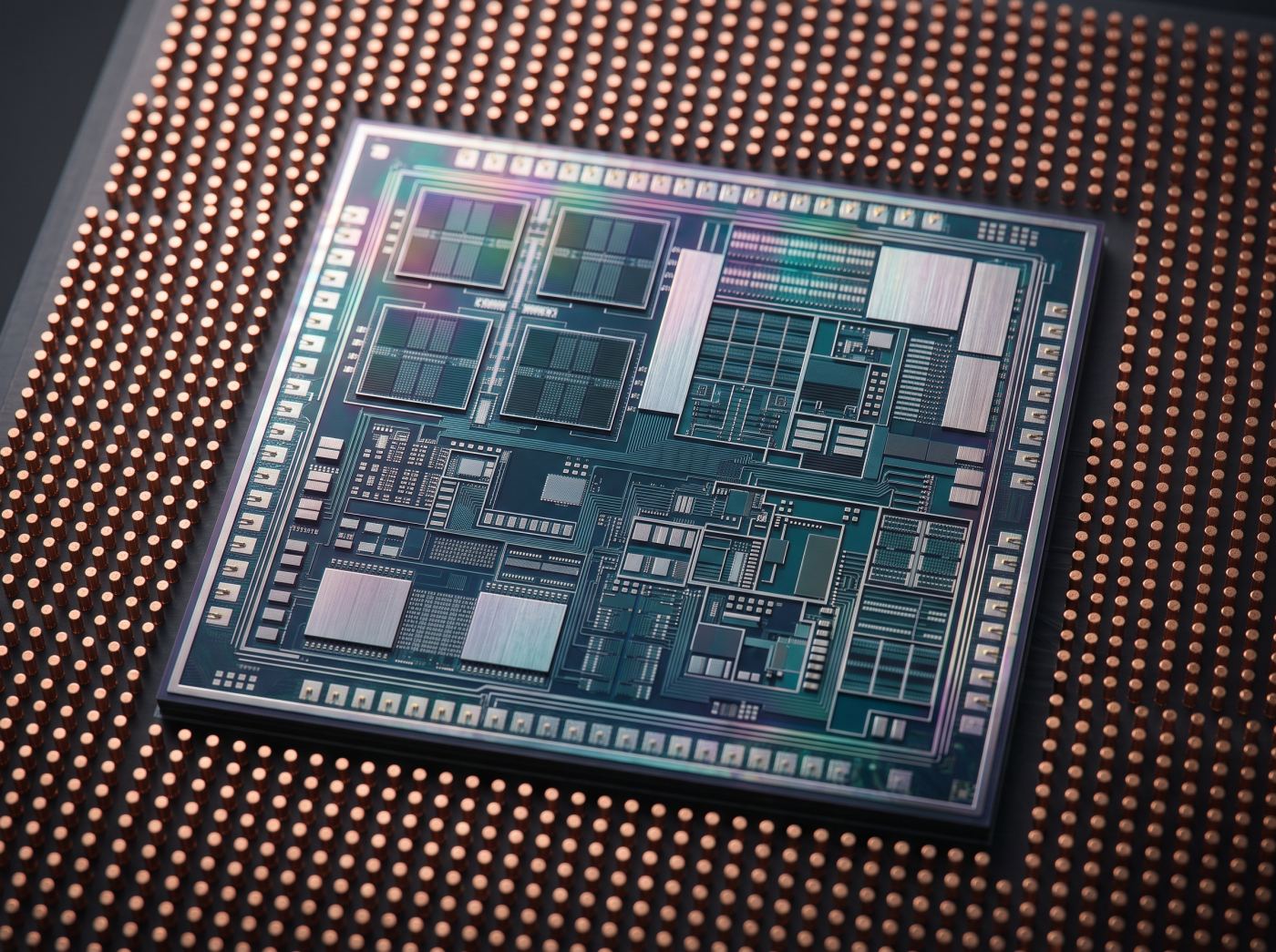
📌 The key points — New information shared on Weibo by leaker Digital Chat Station details Qualcomm’s strategy for its move to 2 nm manufacturing at TSMC. The company will split its top-end offering into two variants: the Snapdragon 8 Elite Gen 6 (SM8950) and the Snapdragon 8 Elite Gen 6 Pro (SM8975). And the real surprise is that the processor itself is identical. These chips will power a number of the Android smartphones arriving this autumn.
To usher in the 2 nm era at foundry TSMC, Qualcomm is making a notable change to the way it segments its high-end line-up. Two chips will sit side by side under the Snapdragon 8 Elite Gen 6 banner, and they are not aimed at the same phones.
That twin line-up raises an essential question for future buyers: what really separates the standard Snapdragon 8 Elite Gen 6 from its Pro version, and what do those technical choices mean for day-to-day use?
What really separates the Gen 6 from the Gen 6 Pro
The obvious assumption would be that the Pro version is simply an “overclocked” chip with its clock speed pushed higher. The technical data says otherwise: the CPU section is strictly identical across both models.
Both versions share the same processor architecture built on TSMC’s 2 nm node, structured around Qualcomm’s own Oryon cores in an octa-core 2 + 3 + 3 configuration: two big cores for heavy workloads, and six more frugal cores for everyday tasks.
The genuine hardware split happens across four other building blocks:
- The graphics processor: Adreno 845 on the standard model, versus the brand-new Adreno 850 on the Pro version.
- Integrated graphics memory (GMEM): 12 MB on the regular chip, versus 18 MB on the Pro variant.
- RAM support: capped at LPDDR5X on the standard version, while the Pro unlocks compatibility with LPDDR6.
- Last-level cache: 6 MB on the standard, 8 MB on the Pro.
The upshot? Qualcomm no longer differentiates the very top of its range through a clock speed race, but through the graphics and memory subsystem. It is a shift in logic, and it explains a great deal about the phones now on their way.
GMEM, LPDDR6 and cache: what these components change in practice
A spec sheet is only worth something once you translate it into concrete gains. Let’s take the three building blocks one by one.
18 MB of GMEM: salvation for long gaming sessions
GMEM (Graphic Memory) is an ultra-fast pool of memory grafted directly onto the heart of the graphics circuit, bypassing the phone’s general RAM. When a 3D game renders a scene, the GPU uses it to handle textures and lighting effects.
With 18 MB — 50% more capacity than the standard model’s 12 MB — the Adreno 850 processes more calculations in a closed loop. It calls on main memory less often, which cuts heat and power draw. In extended gaming, that is what prevents the abrupt drops in smoothness caused by overheating. The kind of spec line nobody dreams about on paper, yet one you notice by your second match.
LPDDR6: the engine behind on-device artificial intelligence
The Pro variant is designed to accommodate LPDDR6, which is settling in this year as the high-end standard. The specification raises bandwidth while lowering the voltage needed for data transfers.
Why does that matter? That transfer speed is what makes it possible to run language models and generative AI processing directly on the device, without going through the cloud. Advanced photo processing — real-time noise reduction, assisted retouching — then happens with no lag when you hit the shutter.
A larger cache: instant responsiveness
The Pro’s 8 MB of last-level cache, against 6 MB on the standard, lets the processor keep more critical data close at hand instead of constantly querying memory. The interface feels snappier, and switching between several heavy apps stays fluid. A third more cache is hardly spectacular on paper — but it is exactly the kind of headroom you feel in use rather than on a test bench.
Who will notice the difference day to day, and who won’t
This segmentation aims each processor at distinct profiles. Let’s be blunt about it, because the question will come up at the moment of purchase.
Those who will see a real difference
- Demanding gamers: on graphically hungry 3D titles, the Adreno 850 paired with 18 MB of GMEM will deliver steadier frame rates, and a cooler phone after a long session.
- Mobile content creators: on-device 4K/8K video grading and exporting heavy streams will benefit from LPDDR6 bandwidth.
- Heavy users of AI tools: local image generation and transcription will run noticeably faster.
Those who won’t see anything at all
For browsing, streaming, messaging, social media and everyday photography, the two chips deliver exactly the same level — carried by the same Oryon cores and the same 2 nm node. So there it is: for ordinary use, paying for the Pro version brings you nothing.
A trap for buyers: watch out for marketing names
Pay close attention here, because this is the most useful point in the article. Two smartphones announced under the “Snapdragon 8 Elite Gen 6” banner will not necessarily carry the same chip.
Some manufacturers will use the standard chip (SM8950) to keep production costs in check — against a backdrop of rising component prices across the board — while others will reserve the Pro version (SM8975) for their most expensive models. So you will need to check the exact processor reference on board before judging a given model’s performance-to-price ratio.
AnTuTu benchmark: a first marker, to be taken for what it is
A smartphone’s real-world performance depends first and foremost on its software optimisation and its cooling. That said, an early run on the AnTuTu V11.1.4 test bench gives an idea of the Pro chip’s potential (SM8975).
The prototype tested cleared the 4,835,412 point mark, including 1,368,930 for the CPU section and 1,854,826 for the Adreno 850 GPU. That is roughly 6% above the best scores of the previous generation.
Those 6% are worth dwelling on, because they confirm everything above: with the CPU identical from one chip to the other, the generational gain could only come from the graphics side. And the graphics side is indeed what carries the score.
One caveat, though, and it is a significant one: AnTuTu has stated that this result does not appear in its public databases. The score is therefore an early indicator of trajectory, not a figure set in stone.
Comparison table: Snapdragon 8 Elite Gen 6 and Gen 6 Pro
| Specification | Gen 6 (standard) | Gen 6 Pro |
|---|---|---|
| Internal reference | Qualcomm SM8950 | Qualcomm SM8975 |
| Process node | 2 nm TSMC | 2 nm TSMC |
| CPU architecture | 8 Oryon cores (2 + 3 + 3) | 8 Oryon cores (2 + 3 + 3) |
| Graphics processor | Adreno 845 | Adreno 850 |
| GMEM memory | 12 MB | 18 MB |
| Supported RAM | LPDDR5X | LPDDR6 |
| Last-level cache | 6 MB | 8 MB |
| Target use | Versatile high-end | Gaming and heavy-AI flagships |
Which smartphones will launch these two platforms?
The race to adopt these 2 nm chips will open as early as September 2026:
- Xiaomi 18 series: tipped to be the first to fit the chip, with a balance between battery life and power in a compact format.
- Honor Magic 9 series: confirmed for 28 September in Beijing. The brand is said to be reserving the Pro version of the processor for its higher-end variants — bearing in mind that the exact make-up of the range, and in particular the name of the third model, remains uncertain, as we explained yesterday.
- OnePlus 16 and iQOO 16 series: expected between late September and early October, to make the most of the Adreno 850 in the performance flagship segment.
In summary
Qualcomm is clarifying its shift to 2 nm with two chips playing clearly defined roles. By keeping an identical CPU while beefing up the graphics memory and adding LPDDR6 support on the Pro variant, the company leaves manufacturers free to tailor their phones to real-world usage without imposing a systematic price premium.
We will be tracking how these chips behave as soon as the first real-world tests appear — and for our part, we can’t wait to get our hands on them. In the meantime, you can browse the Xiaomi, Honor and OnePlus smartphones already in our catalogue, along with our selection of fast chargers.

