

📌 Updated 13 August 2026: the Chinese version of the Vivo X500 Pro Max (model number V2602DA) has just cleared 3C certification. That regulatory filing locks in three things: 90 W wired charging, BeiDou satellite communication and n79 band support. The rest of the spec sheet — 2K 144 Hz display, LPDDR6, 200 MP periscope, battery close to 8,000 mAh — still comes from leaks, and we flag it as such below.
As part of the complete renewal of its ranges, Chinese manufacturer Vivo is about to skip the “X400” designation — because of the Asian tetraphobia that associates the number 4 with death — and launch the Vivo X500 family directly. The range is built around four main models (X500e, standard X500, X500 Pro and X500 Pro Max), ahead of a Vivo X500 Ultra fitted with a Qualcomm chip, expected in the first half of 2027.
At the top of that hierarchy for 2026 sits the Vivo X500 Pro Max. A genuine technology showcase for the brand, this model brings together the manufacturer’s best innovations in 2K display, memory architecture and very high-resolution photography.
3C certification: what the official filing actually locks in
The Vivo X500 Pro Max has just passed through China’s 3C authority under the reference V2602DA. This kind of filing is regulatory: it does not describe the phone, but whatever it declares has been checked. Three things come out of it.
- 90 W wired charging — the first specification on this model that is genuinely locked in rather than merely reported.
- BeiDou satellite communication, which lets you send an emergency message with no network coverage at all.
- n79 band support, a 5G frequency widely used in China.
The same round saw two other devices from the group go through, under the references V2606A and V2609A — most likely the iQOO 16 and the Vivo X500 Pro. The whole range is therefore moving at the same pace, which makes an early-autumn launch very credible.
Everything else on this page — display, cameras, memory, battery capacity — comes from leaks and corroborating reports, not from official documents. The distinction matters, and we are keeping it until the announcement.
Design and large 2.5D display: total immersion in 2K LTPO at 144 Hz
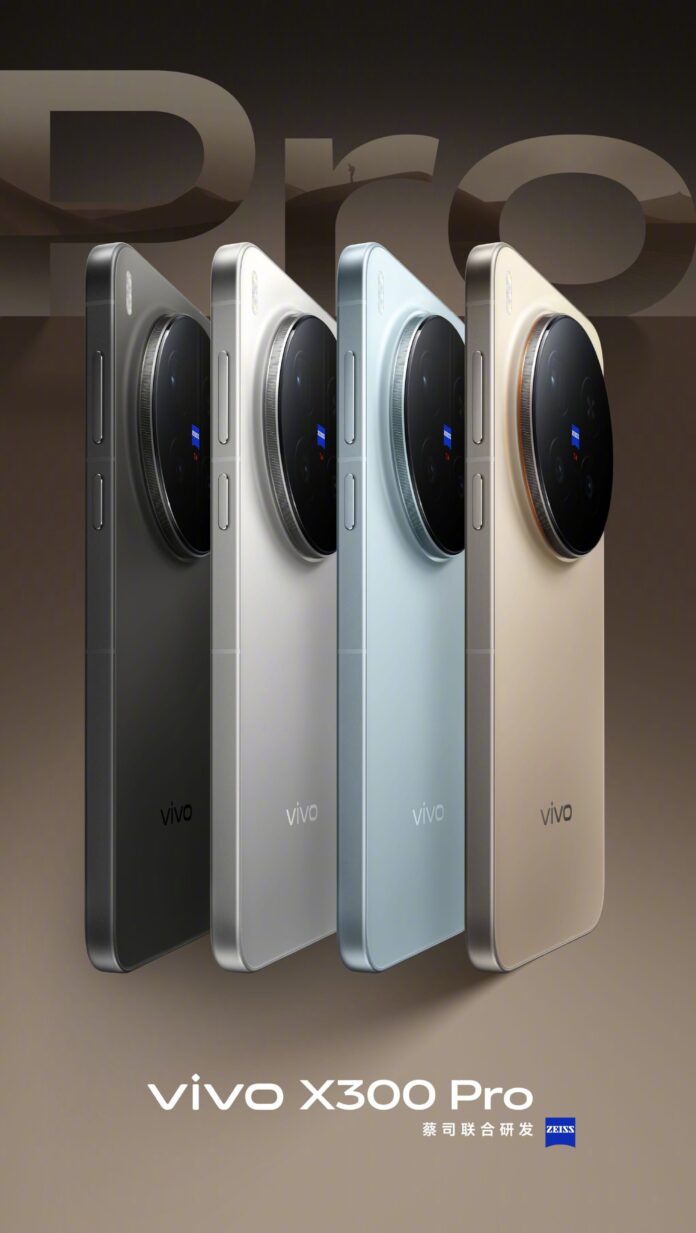
Like the Pro model, the Vivo X500 Pro Max carries an imposing circular camera module centred on the back, setting it apart visually from the standard Vivo X500, whose camera block sits off-centre in the upper left corner. The phone is dressed in profiled 2.5D glass and opts for a completely flat panel at the front.
The display is a very large BOE OLED panel measuring 6.85 inches. It offers a native 2K resolution of 3,200 × 1,440 pixels, delivering surgical precision for watching video content and editing photos. Thanks to LIPO encapsulation technology (Low-Injection Pressure Overmolding), the chassis shows remarkably thin symmetrical bezels on all four sides, along with softened corners to keep the phone pleasant to hold despite its size.
The screen features an LTPO adaptive refresh rate from 1 to 144 Hz. The system modulates display speed dynamically: it climbs to 144 Hz during gaming or fast scrolling for optimal responsiveness, and drops to 1 Hz as soon as the content becomes static. This intelligent management significantly reduces the power draw of the large 2K panel.
Processor and memory: Dimensity 9600 Pro and early LPDDR6 adoption
To drive its most powerful flagship, Vivo calls on the MediaTek Dimensity 9600 Pro processor. Built by TSMC on its ultra-advanced 2 nm process, this new-generation chip brings substantial performance gains while keeping power consumption in check.
But the real technical break in the X500 Pro Max lies in the memory subsystem. Vivo would be one of the very first manufacturers in the world to fit the LPDDR6 RAM standard on a production smartphone.
In practice, LPDDR6 dramatically increases memory bandwidth compared with the LPDDR5X generation, while lowering operating voltage. For the user, this generational leap should translate into three very concrete benefits:
- Near-instant processing of photo-editing and artificial-intelligence algorithms.
- Running complex generative AI models locally, on the device, without noticeable slowdown.
- The ability to keep a large number of demanding apps open in the background without any of them having to reload when you switch between them.
The whole runs on the OriginOS 7 interface, tuned to make the most of the 2 nm architecture and LPDDR6 speed, on an Android 16 base.
Ultimate camera set-up: 200 MP periscope and Sony LYT-838 LOFIC sensor
Photography is the heart of the Vivo X500 Pro Max’s innovation. The brand deploys a very high-end triple sensor configuration on the back:
- 50 MP Sony LYT-838 main sensor (1/1.28-inch) with LOFIC technology
- 200 MP periscope telephoto (1/1.4-inch, 85 mm) with telephoto macro
- 50 MP ultra-wide (Sony IMX8 series)
At the front, the selfie camera would also move up to 50 MP, with autofocus — a detail that changes everything in video calls and arm’s-length video, where fixed-focus sensors go soft the moment you move away from the ideal distance.
The Sony LYT-838 main sensor features LOFIC technology (Lateral Overflow Integration Capacitor). This system solves one of the major problems of smartphone photography: losing detail in very bright areas. When a conventional sensor receives too much light — at sunset, into strong backlighting or under night-time neon — its pixels saturate and create blown-out white patches. The LOFIC structure channels that excess light charge into an adjacent capacitor rather than letting it saturate the pixel. The result: the brightest highlights are preserved, delivering extended dynamic range.
The centrepiece of the camera block remains its 200 MP periscope telephoto. Mounted on a very large 1/1.4-inch sensor with an 85 mm focal length (ideal for portraits), this module allows impressive detail capture. The very high 200 MP resolution makes it possible to apply powerful digital zoom and to crop deep into a photo after the shot without degrading sharpness. This telephoto also supports macro photography, capturing detail invisible to the naked eye while keeping a comfortable working distance.
To guarantee sharp photos when using the zoom at its maximum reach or in low light, Vivo fits a new optical image stabilisation (OIS) system with reinforced performance, able to compensate instantly for the micro-movements of the hand.
8,000 mAh battery and 90 W charging: the speed is now locked in
Taking advantage of the internal volume offered by its large 6.85-inch chassis, the Vivo X500 Pro Max is aiming for a battery-life record in the super-flagship category.
Development prototypes tested in the factory would carry a high-density silicon-carbon battery with a capacity in the region of 8,000 mAh. While the final cell design is still subject to minor adjustments before the assembly line starts up, that giant capacity, paired with the efficiency of the 2 nm process and LPDDR6 memory, makes it reasonable to expect two to three full days of use without reaching for a power socket.
It is on charging speed that 3C certification brings something solid: it will be 90 W wired, a figure now locked in rather than reported. Wireless charging, on the other hand, is not covered by that filing — reports point to 40 to 50 W, still to be taken as provisional.
On the equipment side, the same reports point to an ultrasonic in-display fingerprint sensor and an IP68 and IP69 rated body. Neither appears in the 3C filing: both remain to be confirmed.
Vivo X500 Pro Max price: what to expect
Vivo has not communicated any pricing, and will not do so before the announcement. The previous generation does give a useful reference point: at its Chinese launch, the Vivo X300 Pro started at 5,299 yuan — around €685 — in a 12 GB + 256 GB configuration, rising to 6,699 yuan (around €865) for 16 GB + 1 TB.
One detail in that price list is worth pausing on. On the X300 Pro, satellite connectivity was restricted to a premium version at 8,299 yuan, around €1,070. Yet the X500 Pro Max’s 3C filing shows BeiDou satellite on the model itself. What cost a great deal extra last year would become standard equipment: quite possibly the most concrete change of this generation.
That said, the Pro Max opens a tier above the Pro in the hierarchy, and the 2K display, the 200 MP periscope and LPDDR6 are three expensive line items. Expect a noticeably higher figure than the X300 Pro’s. We will refresh this section as soon as it is official.
Launch and global variant
The Vivo X500 Pro Max is expected to be made official in September 2026 in China.
A global version is indeed planned, and it has already been through the same formalities: model V2610 was spotted last month on Indonesia’s TKDN platform. Seeing a device registered on both sides — 3C in China, TKDN internationally — is the most reliable signal available ahead of an announcement: manufacturers do not pay for these approvals on devices they have no intention of selling.
Vivo X500 Pro Max full specifications
| Component | Specifications |
|---|---|
| Display | Flat 2.5D, 6.85-inch, BOE OLED 2K (3,200 × 1,440 px) |
| Display technologies | LTPO adaptive 1-144 Hz, LIPO, symmetrical bezels |
| Processor | MediaTek Dimensity 9600 Pro (2 nm TSMC) |
| RAM | LPDDR6 (among the world’s first) |
| Operating system | OriginOS 7 on an Android 16 base |
| Main camera | 50 MP (1/1.28″, Sony LYT-838 LOFIC) |
| Telephoto | 200 MP periscope (1/1.4″, 85 mm, reinforced OIS, macro) |
| Ultra-wide | 50 MP (Sony IMX8 series) |
| Front camera | 50 MP with autofocus |
| Battery | In the region of 8,000 mAh (silicon-carbon cell, design not final) |
| Charging | 90 W wired — 3C certified · 40 to 50 W wireless (reported) |
| Connectivity | n79 band and BeiDou satellite — 3C certified |
| Security | Ultrasonic in-display fingerprint, IP68 and IP69 |
| Rear design | Centred circular camera module |
| Model numbers | V2602DA (China) · V2610 (global) |
| Estimated release | September 2026 (China) |
Vivo X500 Pro or Vivo X500 Pro Max: which one to choose?
To help you choose between the two high-end versions of this series:
- Size and resolution: the X500 Pro favours one-handed use with its 1.5K 6.37-inch panel, while the Pro Max stands out as a multimedia giant with its 2K 6.85-inch screen.
- Memory and technology: the Pro Max introduces ultra-fast LPDDR6 RAM for the most intensive processing.
- Telephoto module: the Pro model carries an excellent 64 MP periscope (85 mm), while the Pro Max moves up to a giant 200 MP sensor offering superior cropping headroom.
- Power and charging: a battery targeted between 6,500 and 7,000 mAh for the Pro, against a colossal capacity approaching 8,000 mAh on the Pro Max, paired with 90 W wired charging that is now certified.
To read our analysis of the compact model, see our dedicated article on the Vivo X500 Pro.
In summary
On paper, the Vivo X500 Pro Max stands out as one of the most ambitious phones of 2026. By combining a 2K display at 144 Hz, the speed of LPDDR6 RAM, the power of a 200 MP periscope zoom, a battery approaching 8,000 mAh and 90 W wired charging that is now certified, Vivo delivers a product with no technical compromise whatsoever.
You will be able to find the manufacturer’s products on our shop as soon as they launch. In the meantime, do browse our Vivo smartphones catalogue, along with our ranges of Vivo cases and Vivo tempered glass.

